
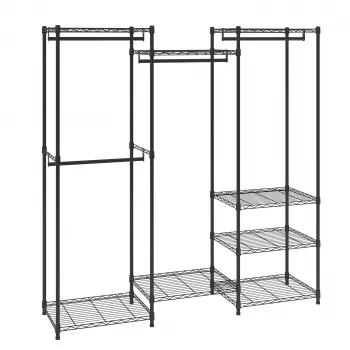
A sturdy drying rack should hold a useful load of damp clothing without wobbling, while still being easy to move and store. For everyday laundry, we recommend choosing a heavy-duty rolling clothing rack with a stable frame and smooth-rolling casters. It can give you room to hang shirts, pants, and other garments without taking up the footprint of a wide folding rack.
Look for a solid frame, secure joints, and a base that feels balanced when the rack is loaded. A broad, stable base helps reduce tipping, especially when heavier items hang on one side. Strong hanging bars matter, too: they should support wet clothing without visibly bending or shifting.
Pay attention to how the rack is assembled and whether its parts lock firmly in place. A rack that feels sturdy when empty may become less stable once clothes are spread across it, so distribute garments evenly and avoid crowding one end.
It can be a practical choice if you prefer to hang clothes rather than lay them across a folding rack. Hanging helps keep garments separated, and wheels make it easier to move the load to a well-ventilated spot. Choose casters that roll smoothly and can be locked when the rack is parked.
A rolling rack is less suitable for small items that need a flat surface unless it includes shelves or another drying area. If you regularly dry socks, delicates, or bulky towels, consider how those items will fit before choosing a rack.
Set the rack on a level floor, lock its wheels before hanging clothes, and spread the load across the frame. Keep heavier garments low or evenly distributed rather than loading one bar or side all at once. Move the rack slowly, particularly over thresholds, and avoid pushing it while it is overloaded.
For more guidance on choosing a sturdy, smooth-rolling option, read our guide to heavy-duty rolling clothing racks.
Leave space between garments so air can circulate, and place the rack in a well-ventilated area. A fan or open window can improve airflow; avoid crowding clothes together on the bars.











Leave a comment